Recap IBTC 2026
Rerouting Cycling & Hiking Tourism

Photos: ©Seraina Wams Photography
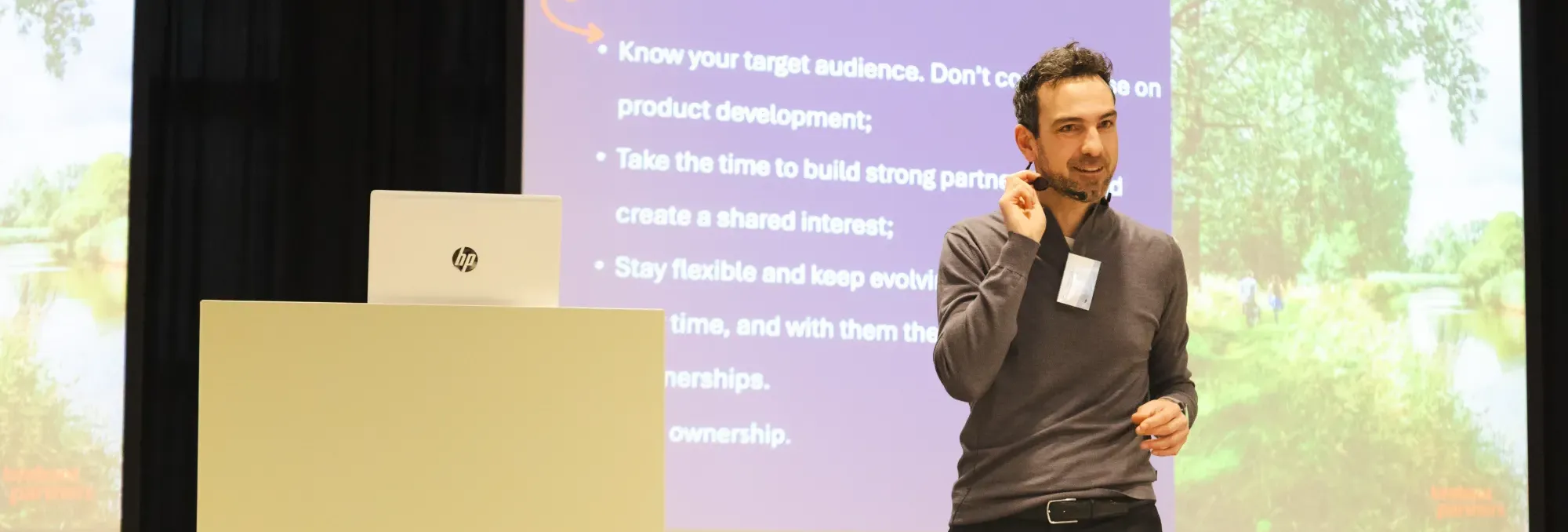
Over 80 professionals in cycling and hiking tourism gathered at the Domstad Conference Center in Utrecht for the fifth edition of the IBTC. The theme this year was “Rerouting Cycling & Hiking Tourism”.
Marjan Gielen, conference organizer and tourism professional, set the tone: “Destinations struggle with crowded paths and exhausted nature, while new regions could benefit from spreading visitors. How can we take steps to better distribute hikers and cyclists across a region or country?”
The presentations indicated that the future of cycling and hiking tourism revolves around better visitor distribution, strong collaboration, smart use of data, and sometimes a more regenerative approach to tourism.
Shanna Bussink (Rayu) demonstrated that spreading visitors is not just an infrastructure challenge, but also a psychological one. Hikers often choose the same familiar spots due to social media and expectations. Her solution? Hikeprofiler.com, a personality-based matching system that classifies hikers into four profiles according to their key values and motivations. This allows destinations to position routes more strategically and make lesser-known trails more attractive.
Projects in Brabant (de Wandelstarter) and the Province of Antwerp showed that active network management is needed to spread crowds. This can be achieved by strategically organizing starting points, improving infrastructure, and sometimes even removing routes. The key lesson: communication and collaboration with local stakeholders are crucial.
Loek Luijbregts (Cycling Incubators) focused on cases in Türkiye and emphasized that active tourism grows most when embedded in local infrastructure, landscape, and amenities. The effect of temporary marketing campaigns and government projects can be limited; when budgets run out, initiatives often fade.
Bert Smit (Ginder) called for a shift from tourism as consumption to tourism that contributes to strengthening nature and local communities – regenerative tourism in other words. Authentic local experiences often prove more important to visitors than classic attractions.
Karine Dupuy (France Vélo Tourisme) noted that coordination between regions, government, and businesses can be a more important success factor than new cycling infrastructure. Through joint marketing, quality standards, and shared data, France developed a strong national network.
Clare Dewey and Kate Norris (Epic Road Rides) provided participants with practical tools to bring routes in lesser-known cycling destinations to public attention.
Robin Ranjore (Eco-Counter) highlighted the importance of reliable visitor data. By combining on-the-ground counts with floating GPS data and smartphone data, destinations can better understand and manage visitor flows.
Rúben Jardao (ERA) spoke about the importance of engaging young people more in hiking organizations and raising awareness of safety on hiking trails.
Agathe Daudibon (ECF/EuroVelo) outlined the main trends in European cycling tourism, including AI and digital innovation, developing short routes around long routes such as EuroVelo, closing the gap in reliable data, and advocating for political recognition.
Eric Nijland (Fietsplatform) presented key figures on Dutch cycling tourism and reviewed the pros and cons of various measurement methods.